
Understanding Kuranda history through Country
Kuranda history begins with Country and the continuing culture of its Traditional Owners. The national park service identifies Djabuganydji Bama as Traditional Owners of Djirri Nyurra Nyurramba, including Barron Gorge. The surrounding Wet Tropics are home to several distinct Rainforest Aboriginal Peoples. Their languages, stories, songs, dances and responsibilities for Country continue today, so a visit should make room for living cultural knowledge alongside accounts of the colonial railway and landscape change.
Country is part of the present relationship between people and place. It gives a different starting point from a chronology that begins with transport infrastructure. When walking through the region, consider both the landscape visible from a lookout and the people who explain its meaning. The rainforest visit guide introduces ways of combining nature and cultural programmes, while the village guide helps place a cultural visit within time in Kuranda.
Locally shared knowledge and continuing rights
On 17 December 2004, a Federal Court Native Title decision recognised existing rights and interests held under traditional law and custom. This date belongs to the history of legal recognition. Cultural connections and responsibilities for Country extend beyond that court event. Keeping the distinction clear helps explain why present-day Traditional Owners belong at the centre of the story rather than appearing only in an introductory paragraph.
At Jumrum Creek, the park service describes a place where language and cultural knowledge are shared with younger people. Queensland also describes the Djabugay Bulmba Rangers working with the Kuranda information centre on locally guided experiences. Make enquiries there about opportunities during the visit. Listening to the people presenting their knowledge is a useful way to approach the region, with attention to who is speaking and the particular Country being discussed.
Our pick: local cultural programme
Our take: The park visit includes a Pamagirri cultural programme alongside rainforest activities.
Hand-picked tours, booked through GetYourGuide. Prices are indicative starting prices in Australian dollars (as of October 2026). Tap a tour for live availability and the current price in your currency.
A cultural programme in the rainforest
Park admission combines an amphibious rainforest tour, a Pamagirri dance show and Dreamtime Walk, and access to the wildlife area.
Rainforestation and the Pamagirri programme
Rainforestation Nature Park is an external visitor attraction outside Kuranda at Kennedy Highway. Its Pamagirri programme presents dance and cultural activities. The park acknowledges Djabugay as Traditional Custodians and describes guides sharing cultures of other First Nations as well. Approach each presentation in its own context. The wider Wet Tropics encompass different peoples and traditions, and the name of one visitor programme should not stand for every community.
The admission experience offered here includes entry to the park, an Army Duck amphibious rainforest tour, the Pamagirri Aboriginal Experience with dance show and Dreamtime Walk, and the Koala and Wildlife Park. This is a programme bringing together cultural presentation and nature activities. Allow the performance and guided walk to be understood as parts of that visit rather than treating the ticket as a dedicated history lecture. Travel to the park is a separate planning task; use the transport guide to arrange the wider journey.
There is value in leaving time to listen instead of trying to fit cultural presentation between several hurried stops. Attend to the context given by the people delivering the programme. Traditional stories and plant knowledge are best approached through that local explanation. A visitor's role is to learn respectfully, without turning what is heard into collecting instructions or a general account of all Aboriginal cultures.
Gold, timber and the railway connection
The region's colonial economic history includes the gold rush of the 1870s and timber cutting in the 1880s. These activities form the background to changing transport links through the rainforest. The railway was completed in 1891. It belongs within a broader account of economic activity and movement through the landscape, alongside the continuing connections of Traditional Owners.
Today the railway is an external passenger experience through the gorge. Historical completion and present-day operation are separate questions: all services are cancelled from 2 to 6 November 2026, according to the planning information dated 3 November 2026. Consult subsequent operating notices for later travel. A history page can explain why the route matters without making a journey essential to understanding the village. Walking in Kuranda and learning from local cultural presentations offer other perspectives on the area.
Water, World Heritage and caring for the landscape
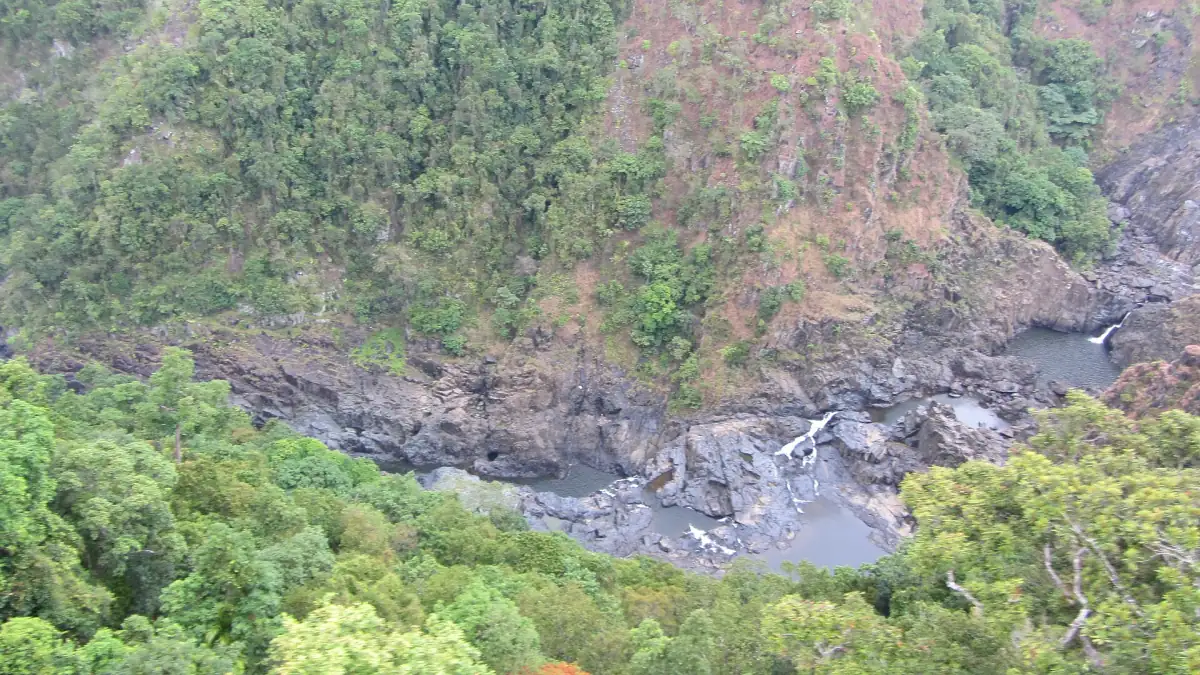
The river also belongs to a history of engineered change. The park service links the gorge to Tinaroo Dam and a hydroelectric system rebuilt or replaced in 1963. Upstream infrastructure influences flows at Barron Falls alongside seasonal rainfall. The water visible from a lookout is therefore part of a landscape shaped by natural processes and human decisions.
The Wet Tropics of Queensland entered the World Heritage List in 1988. This is the name of the wider listed property, with Kuranda situated in the rainforest region. The listing adds a conservation chapter to the story rather than replacing its cultural history. Djabugay Traditional Owners and the Queensland Parks and Wildlife Service are named in park management.
Put that context into practice during a walk: remain on paths, leave living and dead plant material in place, and clean soil and plant debris from equipment, footwear and vehicles. These measures help limit the spread of myrtle rust. The Barron Falls guide covers the practical access details for seeing the gorge. Understanding its history can begin with a simple decision to treat the landscape and its cultural relationships with care.
Questions about history and culture
Who are the Traditional Owners of Barron Gorge?
The park service identifies Djabuganydji Bama as Traditional Owners of Djirri Nyurra Nyurramba, including Barron Gorge.
What happened in 2004?
The Federal Court decision of 17 December 2004 recognised existing Native Title rights and interests under traditional law and custom.
Is Kuranda itself the World Heritage property?
The listed property is the Wet Tropics of Queensland, inscribed in 1988. It covers a much wider rainforest region.